
Manu National Park Peru: The 4 Layers Most Travelers Don’t Understand
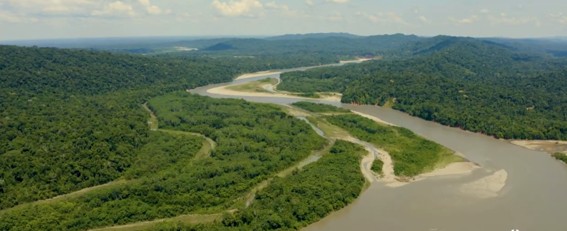
When most people hear “Manu,” they imagine rainforest, long rivers, and animals that are difficult to find anywhere else.
And they are not wrong.
But that is only part of it.
Manu, in the Peruvian Amazon, is not a single place.
It is a wide, uneven territory
where conservation, communities, science,
and, in some areas, external pressure all coexist.
To understand it,
you have to stop seeing it as one destination.
And start seeing it in layers.
1. The Manu seen in documentaries
Manu National Park
What is known as Manu National Park in Peru is only one part of a much larger system.
This is the core.
One of the most biodiverse places on the planet.
A forest where the system is still largely intact.
Here, species remain that have disappeared elsewhere.
The pygmy marmoset.
The giant river otter.
The harpy eagle.
Trees that have stood for centuries.
Shihuahuaco. Lupuna. Brazil nut.
But even here, the idea of “nature without people” is incomplete.
There is presence.
Primarily Matsigenka communities,
alongside groups in voluntary isolation.
They are not separate from the forest.
They are part of it.
Access is limited.
Some areas are not visited.
Others are only used for research.
Tourism exists,
but it does not define the place.
This is the Manu most people see.
But it is not all of it.
2. The Manu where the forest begins
Cloud forest
Before reaching the lowland Amazon,
the journey passes through another territory.
One where the mountains have not fully ended,
and the forest has already begun.
The cloud forest does not impose itself.
It forms.
Through suspended moisture.
Through clouds that do not pass, but remain.
They settle on leaves, bark, moss.
They hold everything in place.
Nothing changes abruptly here.
The mountain slowly dissolves.
The forest appears without announcement.
It is a fragile balance.
If the clouds rise,
the forest is left outside them.
And it begins to change.
Quietly.
3. The Manu where people live
Amazonian communities
The territory does not end at the park boundary. It continues.
Here, communities live that were here long before tourism.
Matsigenka.
Yine.
Harakbut.
The forest is not scenery.
It is food.
Knowledge.
Daily decision.
Tourism, when it enters,
does not replace that.
It does not redefine it.
The visitor observes.
But if they pay attention,
they begin to understand something more difficult:
that conservation is not an idea.
It is a way of living.
4. The Manu where the limit is defined
Conservation and pressure
Manu is not isolated.
What happens outside, reaches here.
In certain edges, the pressure is concrete.
Logging.
Mining.
Roads that begin to appear.
It is not always visible.
But it is there.
And at the same time, there is another force.
Slower.
Less visible.
Communities that remain.
Initiatives that restore without forcing.
Areas where the forest returns, without urgency.
Not perfect.
Not immediate.
But this is where something important is decided:
whether the forest continues
or begins to shrink.
trends
🌿Manu VS Tambopata : What’s the real difference?
Blog🌿 MANU VS TAMBOPATA: WHAT’S THE REAL DIFFERENCE?.En esta guía de viaje te contaremos acerca del Parque Nacional del Manu, el lugar más biodiverso del planeta. Se encuentra en el...